


Reglamento sobre eliminación y clasificación de jeringas de un solo uso
-
 2021-09-29
-
LEPU


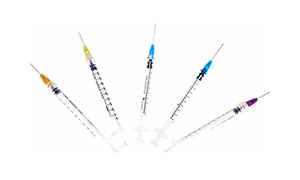
Ⅰ. Normativa para el manejo de jeringas de un solo uso
The Jeringa de un solo uso cannot be discarded at will after use. General hospitals have certain regulations for the use of syringes. The specific systems generally include the following points.
1. la unidad de inoculación debe tener una persona dedicada responsable de la desinfección y destrucción de la jeringa de un solo uso.
Establecer registros de asignación o compra, uso y destrucción de jeringas de un solo uso. Los registros deben ser completos y coherentes con las cuentas.
3. jeringa de un solo uso debe ser utilizado para la vacunación.
4. The use of disposable sterile syringes for preventive vaccination must strictly implement the system of "one injection per person, one use and one destruction per tube".
5. When using the Jeringa de un solo uso, the staff of the grassroots inoculation unit should check whether the Jeringa de un solo uso packaging is intact. And within the validity period, products whose packaging has been damaged or have exceeded the validity period shall not be used.
6. When the inoculation is completed, put the used Jeringa de un solo uso into a puncture-proof safe collection container (safe box) made of strong material, and hand it in for disposal before the next inoculation. It is strictly forbidden to reuse Jeringa de un solo usos.
7. The Jeringa de un solo uso after use can be destroyed by a destroyer or manually. After separating the needle and the syringe, the needle can be directly placed in a puncture-proof container, or be bent with pliers for more than 90 degrees, and soaked in a disinfectant containing 1000 mg/L of available chlorine for more than 60 minutes.
Finalmente, se llevan a cabo una eliminación y destrucción uniforme, incineración o enterramiento para garantizar el uso único de jeringas estériles.
Ⅱ. Jeringa de un solo uso debe ser clasificado y procesado
De acuerdo con el propósito, las jeringas de un solo uso se pueden dividir en tres tipos: contaminación grave, contaminación general y básicamente sin contaminación. Para las jeringas de un solo uso con diferentes grados de contaminación, sus métodos de eliminación también son diferentes, entonces, ¿cómo se clasifican?
1. jeringas estériles de un solo uso gravemente contaminadas
Direct contact with the patient's body fluids. For example, used syringes such as blood draw, pleural fluid draw, and ascites fluid draw. Because the patient's body fluids are a potential source of infection.
2. jeringas estériles de un solo uso generalmente contaminadas
Es decir, solo la parte de la aguja de la jeringa que está en contacto con el paciente, como las inyecciones e infusiones regulares, y algunas jeringas que generalmente se usan con agua antiinflamatoria.
3. jeringa de un solo uso básicamente libre de contaminación
Those that do not come into direct contact with the patient are basically non-polluting Jeringa de un solo usos, such as sterile syringes used when adding medicines. Of course, improper operation and contamination must be ruled out.
This is the classification of Jeringa de un solo usos. You should deal with it according to such a classification method since different pollution levels have different treatment methods.