


Revestimiento liso de alambre de PTCA
-
 2021-07-14
-
LEPU


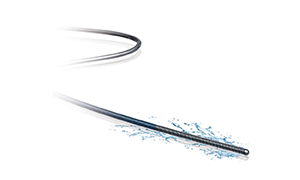
1. alambre PTCA necesita tratamiento de recubrimiento
El propósito del recubrimiento de alambre PTCA es reducir la fricción del alambre guía, mejorar el seguimiento y facilitar la entrega del equipo. El material de recubrimiento debe tener propiedades químicas estables, buena biocompatibilidad y efecto antitrombótico. Según sus características, se puede dividir en dos tipos: hidrófilo e hidrófobo.
Los recubrimientos hidrófobos más comúnmente utilizados son politetrafluoroetileno, dihidrofluoresceina y resina de silicona; Los recubrimientos hidrófilos incluyen polímeros Hydro-track, Hydro-coat y M-Coat VR.
The hydrophilic coating is a thin layer of matte substance in the dry state, which absorbs water molecules to form a smooth gel-like surface and reduce the friction of the Alambre de PTCA.
El recubrimiento hidrófobo repele las moléculas de agua y hace que la superficie sea lisa y cerosa, lo que también reduce la fricción en la superficie del cable guía y mejora el seguimiento.
2. revestimiento hidrófilo alambre de PTCA y alambre de guía hidrófilo
Cabe señalar que existen diferencias conceptuales entre los recubrimientos hidrófilos y los alambres de guía hidrófilos (también llamados alambres de guía superlisos). No todos los alambres de PTCA con recubrimientos hidrófilos se pueden llamar alambres de guía hidrófilos.
The common feature of the hydrophilic guide wire is a smooth polymer sheath. The polymer sheath covers the head end of the guide wire or the entire guide wire. The outer surface of the sheath is coated with hydrophilic coating, so that the smoothness of the Alambre de PTCA is further improved, which makes it easy to find the microchannel in the occluded lesion and pass through the micropore with less resistance, thereby increasing the success rate of intervention of CTO lesions. This feature makes hydrophilic guide wires often used in combination with non-hydrophilic rigid guide wires. In addition, the polymer sheath and smooth coating also make it difficult to maintain the shape of the guide wire head end, which increases the complexity of the operation.